
Planning
Hyperbaric Nursing CE: Safety and Practice
Hyperbaric nursing CE helps nurses strengthen their knowledge of patient assessment, chamber safety, oxygen-related risks and emergency response. Nurses should choose education relevant to their role, follow facility protocols and confirm CE requirements with their board, employer or certification o
Updated 2026-11-10 · Nursing CE editorial team
Every course included · Instant certificates · Renews yearly, cancel anytime before renewal
- Board-approved provider (CA, FL, NV, NY, PA, OH)
- Contact hours and accepted states listed on every course
- Certificate issued the moment you pass
Quick answer
Hyperbaric nursing CE focuses on safely caring for patients receiving hyperbaric oxygen therapy. Important topics include pre-treatment screening, pressure-related complications, oxygen toxicity, fire prevention, patient monitoring and emergency procedures. Because requirements vary, nurses should confirm acceptable courses and contact-hour rules with their nursing board, employer and any applicable certification organization.
What does hyperbaric nursing CE cover?
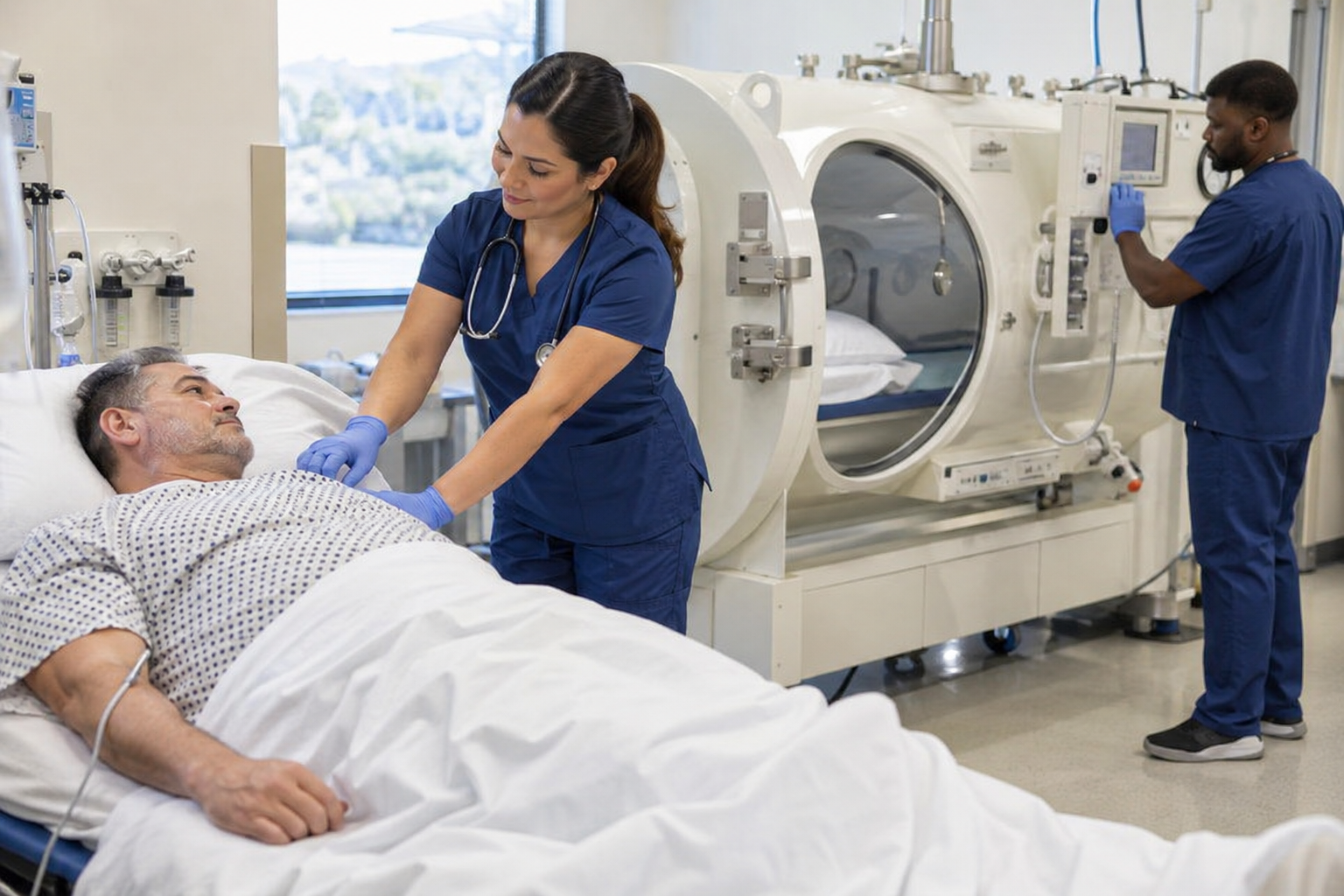
Hyperbaric nursing continuing education commonly addresses care delivered before, during and after hyperbaric oxygen therapy. The goal is to help nurses understand how increased atmospheric pressure and high oxygen concentrations affect patient assessment, monitoring and safety.
Useful education may review chamber types, treatment preparation, pressure equalization, prohibited items, documentation and communication with the hyperbaric team. It may also cover common treatment concerns such as ear or sinus barotrauma, blood glucose changes, anxiety, oxygen toxicity and pulmonary symptoms.
Course completion alone does not establish clinical competency. Nurses should complete the orientation, supervised training and competency validation required by their employer and follow facility policies, equipment instructions and emergency procedures.
What is the nurse’s role in hyperbaric oxygen therapy?
The hyperbaric nurse helps assess whether a patient is ready for treatment, explains what to expect and identifies concerns that require review by the treating clinician. Pre-treatment work may include verifying orders, reviewing relevant health history, obtaining baseline findings and confirming that preparation requirements have been followed.
During treatment, nursing responsibilities depend on the chamber type, staffing model and facility policy. Nurses may monitor the patient’s comfort, neurologic status, respiratory condition and ability to equalize pressure while maintaining communication with the chamber operator and other team members.
After treatment, the nurse reassesses the patient, documents findings and reports new or worsening symptoms. Scope of practice and assigned duties vary, so nurses should work within their authorization, training and facility protocols.
Finish all your CE hours in one place
Unlimited online courses for $29.99 a year, with certificates the moment you pass.
Apple Pay & Google Pay on supported phones Visa · Mastercard · Amex · DiscoverSecure checkout by Stripe
Which hyperbaric chamber safety topics matter most?
Fire prevention is a central safety priority because oxygen-enriched environments can increase combustion risk. Nurses must follow facility rules for approved clothing, dressings, equipment and personal items, as well as screening procedures designed to keep ignition sources and incompatible materials away from the chamber.
Pressure changes also require careful patient preparation. Nurses should teach patients how to equalize ear pressure, watch for pain or difficulty clearing the ears and report symptoms promptly according to protocol. Congestion, anxiety and communication barriers may affect a patient’s ability to tolerate treatment.
Safe practice also depends on standardized checks, clear team communication and readiness for emergencies. Nurses should know their assigned role in chamber evacuation, fire response, medical emergencies and equipment-related events, but should always use the procedures established by their facility.
What complications should hyperbaric nurses recognize?
Barotrauma can affect air-filled spaces, particularly the middle ears and sinuses. Ear pain, pressure, hearing changes or an inability to equalize should be communicated promptly so the team can respond according to the treatment plan and facility policy.
Oxygen toxicity is uncommon but important to recognize. Possible warning findings can involve neurologic, visual, respiratory or other changes. Nurses should understand their facility’s monitoring standards and emergency actions rather than relying on a single symptom to make a diagnosis.
Some patients may experience anxiety or confinement-related distress. Blood glucose may also change in patients with diabetes, making screening and monitoring relevant when ordered or required by protocol. Any unexpected neurologic, respiratory or behavioral change warrants prompt assessment and escalation through the appropriate clinical chain.
How do nurses choose relevant hyperbaric nursing CE?
Start by identifying the education expected for your current or intended role. A nurse who occasionally refers patients for treatment may need a different level of instruction than a nurse who monitors patients in a hyperbaric department or enters a multiplace chamber.
Look for content that addresses patient selection considerations, assessment, pressure-related injury, oxygen safety, fire prevention, chamber operations, documentation and emergency readiness. Education should complement hands-on orientation and competency validation, not replace them.
There is no single CE-hour total that applies to every nurse. Before enrolling, confirm whether a course meets the rules of your nursing board, employer and any certification or specialty organization relevant to your practice.
How can online CE fit into hyperbaric nursing practice?
Self-paced online CE can help working nurses review safety and patient-care concepts around their schedules. Instant certificates make it easier to document completed learning, although nurses remain responsible for confirming that a course is acceptable for their specific renewal or workplace requirements.
Our All-Access pass costs $29.99 per year and includes every course available on this site. It renews yearly, so users who do not want another term should cancel before renewal.
Nurses can also take one free course, Improving Interprofessional Communication and Collaboration. While it is not a substitute for hyperbaric clinical training, communication skills are relevant when coordinating treatment among nurses, chamber operators, prescribers and other members of the care team.