
Heart failure continues to be one of the leading causes of hospital admissions worldwide, placing significant pressure on healthcare systems and nursing teams. Patients frequently present with worsening shortness of breath, fatigue, and uncontrolled fluid overload, which can escalate quickly without proper care.

Without effective heart failure management, patients are at high risk for complications such as pulmonary edema, reduced cardiac output, and repeated hospital readmissions. Delayed recognition of deterioration and inadequate monitoring often lead to poor clinical outcomes, especially in patients with congestive heart failure (CHF).
Evidence-based nursing care, combined with structured assessment and ongoing education, can significantly improve outcomes. Platforms like Fast CE For Less support nurses in strengthening clinical knowledge in CHF care, improving early detection, timely intervention, and long-term patient stability.
Understanding Heart Failure in Clinical Nursing Practice
Heart failure is a condition where the heart cannot pump enough blood to meet the body’s metabolic needs. This leads to reduced cardiac output, systemic congestion, and fluid retention.
Patients commonly present with fatigue, edema, and shortness of breath. These symptoms often worsen gradually but can also appear suddenly during acute exacerbations.
The NYHA classification heart failure system helps nurses assess functional severity from Class I to Class IV. This classification supports clinical decision-making and care planning.
Another essential tool is ejection fraction interpretation nursing, which differentiates between HFrEF and HFpEF. BNP testing further supports diagnosis through BNP levels interpretation nursing, which reflects ventricular strain.
Fluid Balance and Early Detection of Deterioration
Managing fluid balance is one of the most important parts of heart failure management. Fluid accumulation can rapidly lead to respiratory distress and hospitalization if not addressed early.
Key signs of fluid overload include sudden weight gain, worsening orthopnea, lung crackles, and peripheral edema. These symptoms often indicate worsening CHF status.

A structured fluid overload assessment nursing approach includes daily weight monitoring, intake/output tracking, and respiratory assessment. Nurses also evaluate oxygen saturation and response to diuretic therapy.
If untreated, fluid overload can progress to pulmonary edema management nursing emergencies requiring immediate intervention.
Pharmacological Treatment in CHF Care
Medication therapy is essential in stabilizing patients and preventing disease progression in CHF.
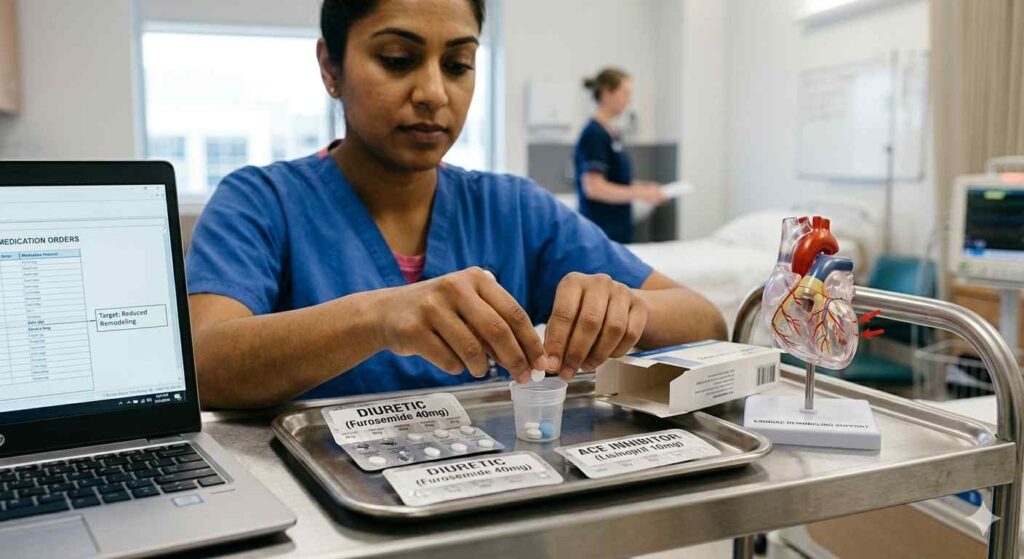
Diuretics are commonly used to reduce fluid overload and improve breathing. They are often the first-line treatment during acute exacerbations.
ACE inhibitors and beta blockers play a long-term protective role in heart failure management. They improve survival, reduce hospitalizations, and support cardiac remodeling.
Other medications include aldosterone antagonists and vasodilators. Nurses must monitor blood pressure, kidney function, and electrolytes during therapy.
Patient education is critical to ensure adherence and prevent relapse.
Nursing Care Plan for Heart Failure Patients
A structured congestive heart failure nursing care plan ensures safe, consistent, and evidence-based care delivery.
Common nursing diagnoses include decreased cardiac output, excess fluid volume, and impaired gas exchange. These conditions require continuous assessment and intervention.
Nursing interventions include high Fowler’s positioning, oxygen therapy, and strict fluid balance monitoring. Daily weights and medication evaluation are also essential components of care.
Outcomes are measured through improved breathing, reduced edema, and stabilized vital signs.
ICU Monitoring and Critical Care Management
Patients with severe CHF often require intensive monitoring in critical care environments. Early detection of deterioration is essential to prevent life-threatening complications.
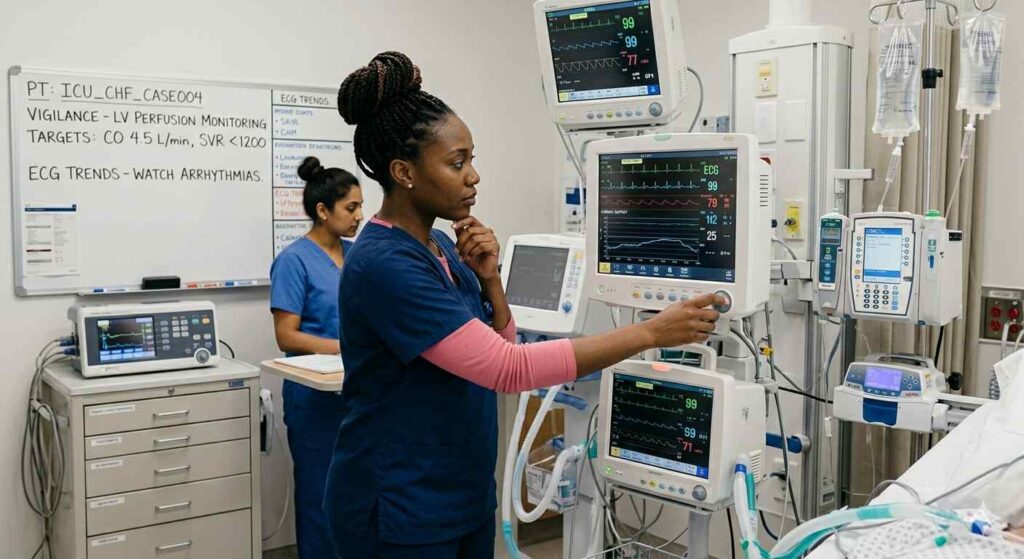
Continuous ECG monitoring helps detect arrhythmias that may worsen cardiac function. Nurses also monitor oxygenation, blood pressure trends, and mental status.
Cardiac output and perfusion monitoring is essential in identifying early signs of shock or poor organ perfusion. Response to medications such as diuretics and inotropes is also closely observed.
Rapid intervention can prevent progression to cardiogenic shock or respiratory failure.
Pulmonary Edema in Heart Failure
Pulmonary edema is a severe complication of heart failure that requires immediate treatment. It occurs due to fluid accumulation in the lungs.
Patients often present with severe shortness of breath, pink frothy sputum, and widespread lung crackles. Anxiety and restlessness are also common.
Emergency nursing interventions include upright positioning, oxygen therapy, and rapid administration of IV diuretics. Continuous monitoring is essential during stabilization.
Quick recognition and treatment significantly improve survival outcomes.
Patient Education and Discharge Planning
Effective heart failure management depends heavily on patient education and adherence to treatment plans.
Patients must be educated on daily weight monitoring to detect early fluid changes. This is one of the most effective ways to prevent readmission.
Sodium restriction and fluid control are essential lifestyle modifications. Medication adherence is equally important, especially with diuretics, ACE inhibitors, and beta blockers.
Patients should also be taught to recognize warning signs such as worsening shortness of breath, swelling, or sudden weight gain.
Long-Term Heart Failure Management Strategies
Long-term care focuses on stabilizing symptoms and preventing disease progression. This includes medication optimization and lifestyle modification.
Regular follow-ups are required to monitor renal function, electrolytes, and BNP levels. Adjustments to therapy are made based on clinical response.
Physical activity should be gradually increased based on tolerance. Patients are encouraged to maintain a heart-healthy lifestyle to improve outcomes.
Consistent application of evidence-based heart failure management strategies reduces hospital readmissions and improves survival.
Role of Continuing Education in Cardiac Nursing
Ongoing education is essential for improving clinical competence in cardiac care. Nurses must stay updated with evolving guidelines and treatment protocols.
Fast CE For Less provides structured learning CE courses that enhance knowledge in CHF care, pharmacology, and ICU management. It also strengthens understanding of modern heart failure management approaches.
Continuous learning improves clinical decision-making and patient safety in both acute and chronic care settings.
Conclusion
Effective heart failure management requires a comprehensive nursing approach that includes early assessment, fluid balance control, medication management, and patient education. Nurses play a critical role in preventing complications and improving quality of life in CHF patients.
With ongoing education and evidence-based practice, healthcare professionals can enhance their ability to manage complex cardiac conditions safely and effectively.
FAQs
What is the main goal of heart failure management in nursing?
The main goal is to improve cardiac output, reduce symptoms like shortness of breath, and prevent complications such as fluid overload and hospitalization. Nursing care focuses on stabilization and long-term disease control.
What is the earliest sign of fluid overload in CHF patients?
The earliest and most reliable sign is rapid weight gain over a short period. This is often followed by swelling, worsening breathing difficulty, and lung crackles.
Why are diuretics important in heart failure treatment?
Diuretics help remove excess fluid from the body, reducing congestion in the lungs and improving breathing. They are especially important during acute CHF exacerbations.
What should nurses monitor during heart failure management?
Nurses should monitor weight, vital signs, oxygen saturation, kidney function, electrolytes, and response to medications. These indicators help guide treatment decisions.
Why is patient education important in heart failure management?
Patient education improves medication adherence, dietary compliance, and early recognition of worsening symptoms. This significantly reduces hospital readmissions and improves long-term outcomes.