
Arthritis is a widespread condition that affects millions of people globally and is one of the leading causes of chronic joint pain and disability. For healthcare professionals pursuing nursing ceus, understanding arthritis is essential for improving patient care and meeting continuing education for nursing license renewal requirements.
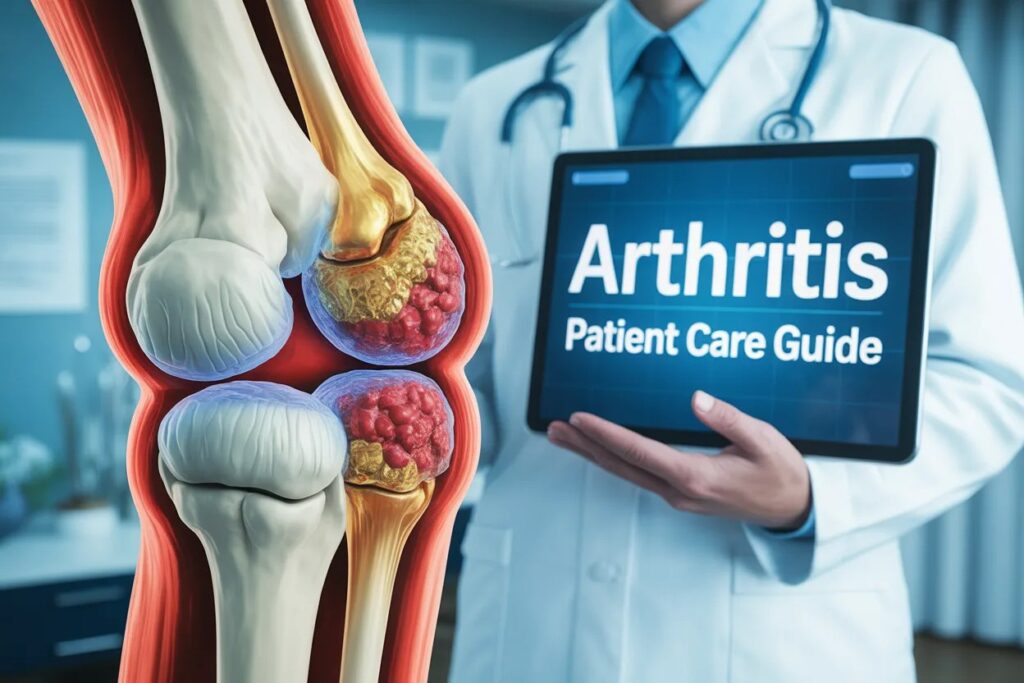
This guide explores the different arthritis types, their causes, symptoms, and arthritis treatment approaches—helping nurses strengthen their clinical knowledge through online ceus.
What Is Arthritis?
Arthritis refers to joint inflammation that leads to pain, swelling, and joint stiffness. It is not a single disease but a broad category that includes over 100 conditions affecting joints and surrounding tissues.
Some forms, such as degenerative joint disease (osteoarthritis), result from wear and tear, while others, like autoimmune arthritis, are caused by the immune system attacking healthy tissue.
For nurses enrolled in registered nurse ceu online, understanding these distinctions is critical for accurate diagnosis and care planning.
Why Should Nurses Study Arthritis?
Arthritis significantly impacts mobility, independence, and quality of life. Patients often present with:

- Persistent joint pain
- Reduced range of motion
- Swollen joints
- Chronic inflammation
Nurses play a key role in managing chronic joint conditions, making arthritis a core topic in continuing education courses for nurses.
Major Types of Arthritis Nurses Should Know
Osteoarthritis (Degenerative Joint Disease)
Osteoarthritis is the most common type of arthritis and is often referred to as degenerative joint disease.
Key Features:
- Breakdown of cartilage
- Bone-on-bone contact
- Gradual increase in joint pain
Symptoms:
- Joint stiffness after rest
- Decreased flexibility
- Mild swelling
This condition is a leading cause of chronic joint pain in older adults and is frequently covered in easy nursing ceus.
Rheumatoid Arthritis (Autoimmune Arthritis)
Rheumatoid arthritis is a form of inflammatory arthritis caused by an autoimmune response.
Key Characteristics:
- Symmetrical joint involvement
- Persistent joint inflammation
- Severe morning stiffness
This type of autoimmune arthritis can also affect internal organs, making it a complex condition often discussed in free ceu courses.
Gout (Crystal-Induced Arthritis)
Gout is a type of inflammatory arthritis caused by uric acid crystal deposits in the joints.
Symptoms:
- Sudden onset of severe joint pain
- Red, swollen joints
- Intense tenderness
Gout is a classic example of acute joint inflammation and is important in ceu fast nursing programs.
Lupus (Systemic Autoimmune Arthritis)
Systemic lupus erythematosus is another form of autoimmune arthritis that affects multiple body systems.
Clinical Signs:
- Joint pain and stiffness
- Skin rashes
- Chronic fatigue
Due to its systemic nature, lupus is often included in nursing ceu online no test modules.
Psoriatic Arthritis
Psoriatic arthritis is a chronic inflammatory joint disease associated with psoriasis.
Key Indicators:
- Swollen fingers and toes
- Joint stiffness
- Nail changes
It is a significant form of chronic inflammatory arthritis covered in free ceu’s for nurses.
Juvenile Arthritis
Juvenile arthritis refers to arthritis occurring in children and includes various autoimmune and inflammatory joint conditions.
Understanding this condition is important for pediatric nurses pursuing cheap nursing ceu options.
Common Symptoms of Arthritis
Most forms of arthritis share similar symptoms, including:
- Chronic joint pain
- Joint swelling
- Joint stiffness
- Reduced mobility
Recognizing early signs of joint inflammation can help prevent long-term damage.
Causes and Risk Factors
Arthritis can develop due to multiple underlying causes:
Causes:
- Cartilage breakdown (degenerative joint disease)
- Immune system dysfunction (autoimmune arthritis)
- Crystal accumulation (gout)
Risk Factors:
- Aging
- Obesity
- Genetics
- Joint injuries
These factors are often emphasized in no test ceu for nurses focused on prevention.
Diagnosis and Clinical Evaluation
Diagnosing arthritis involves:
- Physical examination of joints
- Imaging to detect joint damage
- Blood tests for inflammatory markers
Accurate diagnosis is crucial for selecting the right arthritis treatment plan.
Arthritis Treatment and Management

Effective arthritis treatment focuses on reducing pain, improving function, and slowing disease progression.
Non-Pharmacological Treatments:
- Exercise and physical therapy
- Weight management
- Joint protection strategies
Medications:
- Anti-inflammatory drugs
- Corticosteroids
- Disease-modifying drugs
Advanced Treatments:
- Surgical interventions such as joint replacement
These management strategies are commonly included in ceus for nursing license renewal.
The Role of Nurses in Arthritis Care
Nurses play a central role in managing chronic joint conditions by:
- Educating patients about arthritis symptoms
- Promoting lifestyle changes
- Monitoring medication effectiveness
- Supporting pain management
Completing nursing ceus helps nurses stay updated on best practices.
Benefits of Online CEUs for Arthritis Education
Modern learning platforms provide flexible and accessible options for nurses.
Key Benefits:
- Self-paced modules
- Affordable learning options
- Access to free nursing ceus no test
These features make it easier to stay compliant while gaining expertise in arthritis treatment.
Final Thoughts
A strong understanding of arthritis types, joint inflammation, and arthritis treatment is essential for nurses delivering high-quality care. By completing nursing ceus, healthcare professionals can stay informed about the latest approaches to managing chronic joint pain and improving patient outcomes.
With flexible options like online ceus, free nursing ceus, and self-paced learning, advancing your expertise in arthritis care is both convenient and effective.
FAQs
What is arthritis?
Arthritis is a condition involving joint inflammation that causes pain, stiffness, and reduced mobility.
What are the main types of arthritis?
The main types include osteoarthritis, rheumatoid arthritis, gout, lupus, and psoriatic arthritis.
What causes chronic joint pain in arthritis?
Chronic joint pain can result from cartilage damage, inflammation, or immune system dysfunction.
What is inflammatory arthritis?
Inflammatory arthritis refers to conditions like rheumatoid arthritis where the immune system causes joint inflammation.
Can arthritis be cured?
Most forms cannot be cured, but proper arthritis treatment can manage symptoms effectively.
Why is arthritis important in nursing ceus?
It is a common condition that requires ongoing management and patient education.
Are there flexible CEU options for nurses?
Yes, many platforms like Fast CE For Less offer free ceu courses and convenient online learning formats.
Do nurses need CEUs for license renewal?
Yes, CEUs are required for maintaining a valid nursing license in many regions.