
Antibiotics are essential medications used to treat bacterial infections, and their effectiveness depends largely on how they work inside the body. Understanding the mechanism of action of antibiotics is critical for nurses, clinicians, and healthcare professionals, especially those pursuing continuing professional development and meeting nurse license renewal requirements through flexible learning options such as online ceus and structured pharmacology education.
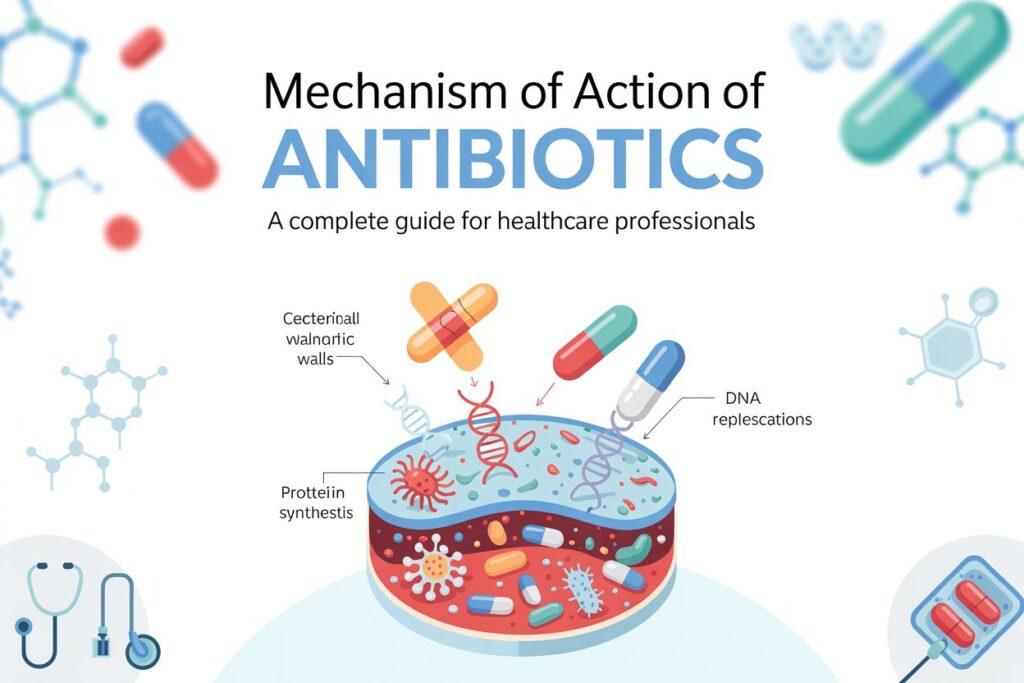
This guide is designed for learners exploring continuing education courses for nurses, including programs that support clinical competence, medication safety, and evidence-based practice.
What Is the Mechanism of Action of Antibiotics?
The mechanism of action of antibiotics describes how these drugs interfere with bacterial survival, growth, or replication. Antibiotics selectively target structures or processes unique to bacteria, allowing them to treat infections without harming human cells.
Depending on their activity, antibiotics may:
- Kill bacteria directly (bactericidal)
- Inhibit bacterial growth (bacteriostatic)
This foundational concept is often included in pharmacology modules within structured learning paths such as registered nurse ceu online programs and other professional education formats.
Why Understanding Antibiotic Mechanisms Matters

For healthcare professionals, understanding how antibiotics work supports:
- Safe medication administration
- Appropriate drug selection
- Monitoring therapeutic outcomes
- Prevention of antimicrobial resistance
- Improved patient education
These competencies are frequently emphasized in online nursing ceu courses and related continuing education pathways that contribute toward license maintenance and clinical proficiency.
Major Mechanisms of Action of Antibiotics
Antibiotics act through several primary mechanisms, each targeting a specific bacterial function.
1. Inhibition of Cell Wall Synthesis
The bacterial cell wall is essential for structural integrity. Some antibiotics disrupt its formation, leading to cell rupture.
How it works:
- Blocks peptidoglycan synthesis
- Weakens structural support
- Causes osmotic lysis
Clinical relevance:
- Effective against actively dividing organisms
- Commonly covered in pharmacology-focused education for clinical practice
2. Inhibition of Protein Synthesis
Bacteria rely on ribosomes to produce proteins necessary for growth. Certain antibiotics bind to ribosomal subunits and interrupt this process.
How it works:
- Targets bacterial ribosomes (30S or 50S)
- Disrupts translation
- Stops protein production
Clinical relevance:
- Can result in either growth inhibition or bacterial death
- Frequently included in advanced pharmacology training modules
3. Inhibition of Nucleic Acid Synthesis
Some antibiotics interfere with DNA or RNA replication, preventing bacteria from reproducing.
How it works:
- Inhibits enzymes responsible for DNA replication
- Blocks transcription and replication processes
- Prevents cell division
Clinical relevance:
- Used in more complex or systemic infections
- Important for understanding treatment strategies in clinical settings
4. Disruption of Metabolic Pathways
Certain antibiotics target essential bacterial metabolic processes, particularly those involved in folic acid production.
How it works:
- Inhibits key metabolic enzymes
- Prevents synthesis of essential nutrients
- Limits bacterial growth and survival
Clinical relevance:
- Selectively affects bacteria due to differences in metabolic pathways
- Often used in combination therapies for enhanced effectiveness
Bactericidal vs Bacteriostatic Effects

Antibiotics are also categorized based on their effect on bacteria:
- Bactericidal agents eliminate bacteria directly
- Bacteriostatic agents inhibit growth, allowing the immune system to clear the infection
The choice between these approaches depends on infection severity, patient condition, and clinical judgment.
Empiric vs Targeted Therapy
Mechanism of action plays an important role in treatment strategies:
Empiric Therapy
- Initiated before identifying the causative organism
- Uses broad-spectrum agents based on clinical presentation
Targeted Therapy
- Adjusted after laboratory identification
- Uses narrow-spectrum agents directed at the specific pathogen
This approach supports timely treatment while promoting responsible medication use.
Factors Influencing Antibiotic Selection
Healthcare professionals consider several factors when choosing an appropriate antibiotic:
- Type and severity of infection
- Patient medical history
- Allergies
- Organ function (renal and hepatic)
- Potential drug interactions
- Culture and sensitivity findings
Antibiotic Resistance and Stewardship
Antibiotic resistance develops when bacteria adapt and become less responsive to treatment. Contributing factors include overuse, inappropriate prescribing, and incomplete treatment courses.
Prevention strategies include:
- Evidence-based prescribing practices
- Patient adherence to prescribed regimens
- Clinical protocols that support appropriate use
- Institutional stewardship programs
Side Effects and Safety Considerations
Antibiotics may produce adverse effects, including:
- Gastrointestinal discomfort
- Allergic reactions
- Sensitivity to sunlight
- Drug interactions
Monitoring patients and providing education are essential components of safe care.
Role of Nurses in Antibiotic Therapy
Nurses play a key role in medication management:
- Administering antibiotics correctly
- Monitoring patient response
- Identifying adverse reactions
- Educating patients on adherence and safety
- Ensuring timely dosing schedules
These responsibilities are central to clinical practice and are reinforced through structured learning in professional development programs.
Importance of Continuing Education
Ongoing professional education helps healthcare providers maintain competence and stay updated with evolving clinical guidelines. It supports:
- Improved clinical decision-making
- Enhanced patient safety
- Updated pharmacological knowledge
- Compliance with licensing requirements
Educational opportunities such as continuing education courses for nurses and similar programs help professionals stay current with best practices in infection management.
Conclusion
The mechanism of action of antibiotics explains how these medications combat bacterial infections by targeting essential cellular processes such as cell wall formation, protein synthesis, nucleic acid replication, and metabolic pathways.
For healthcare professionals, a clear understanding of these mechanisms is essential for safe prescribing, effective patient care, and responsible use of antibiotics. Continuous professional learning ensures clinicians remain competent and aligned with modern healthcare standards while delivering high-quality care.
FAQs
How are antibiotic topics typically covered in CEU courses for nurses?
CEU programs often include pharmacology modules that explain antibiotic mechanisms, classification, safe administration practices, and clinical decision-making relevant to infection management.
Why is understanding antibiotic mechanisms included in continuing education requirements?
It helps nurses improve medication safety, recognize appropriate usage, and apply evidence-based practices when caring for patients with bacterial infections.
Do CEU courses on antibiotics include clinical scenarios?
Yes, many programs use case-based learning to help nurses apply knowledge of antibiotic selection, dosing considerations, and patient monitoring in real-world situations.
How do CEU courses help nurses manage antibiotic administration safely?
They provide guidance on correct timing, dosage accuracy, monitoring for adverse reactions, and patient education to ensure effective therapy outcomes.
Are antibiotic resistance topics included in CEU pharmacology training?
Yes, CEU courses often cover resistance patterns, contributing factors, and strategies to promote responsible antibiotic use in clinical settings.
Can CEU courses improve a nurse’s ability to interpret antibiotic-related lab results?
Many programs include training on understanding culture and sensitivity reports, helping nurses support appropriate therapy adjustments under clinical guidance.
Do CEU programs address patient education regarding antibiotics?
Yes, nurses learn how to educate patients about adherence, side effects, and the importance of completing prescribed antibiotic courses.
How does CEU learning support better clinical judgment in antibiotic therapy?
By reinforcing pharmacological principles and updated guidelines, CEU courses help nurses make informed decisions and collaborate effectively with the healthcare team.