Telenursing: Remote Assessment, Communication and Safe Escalation
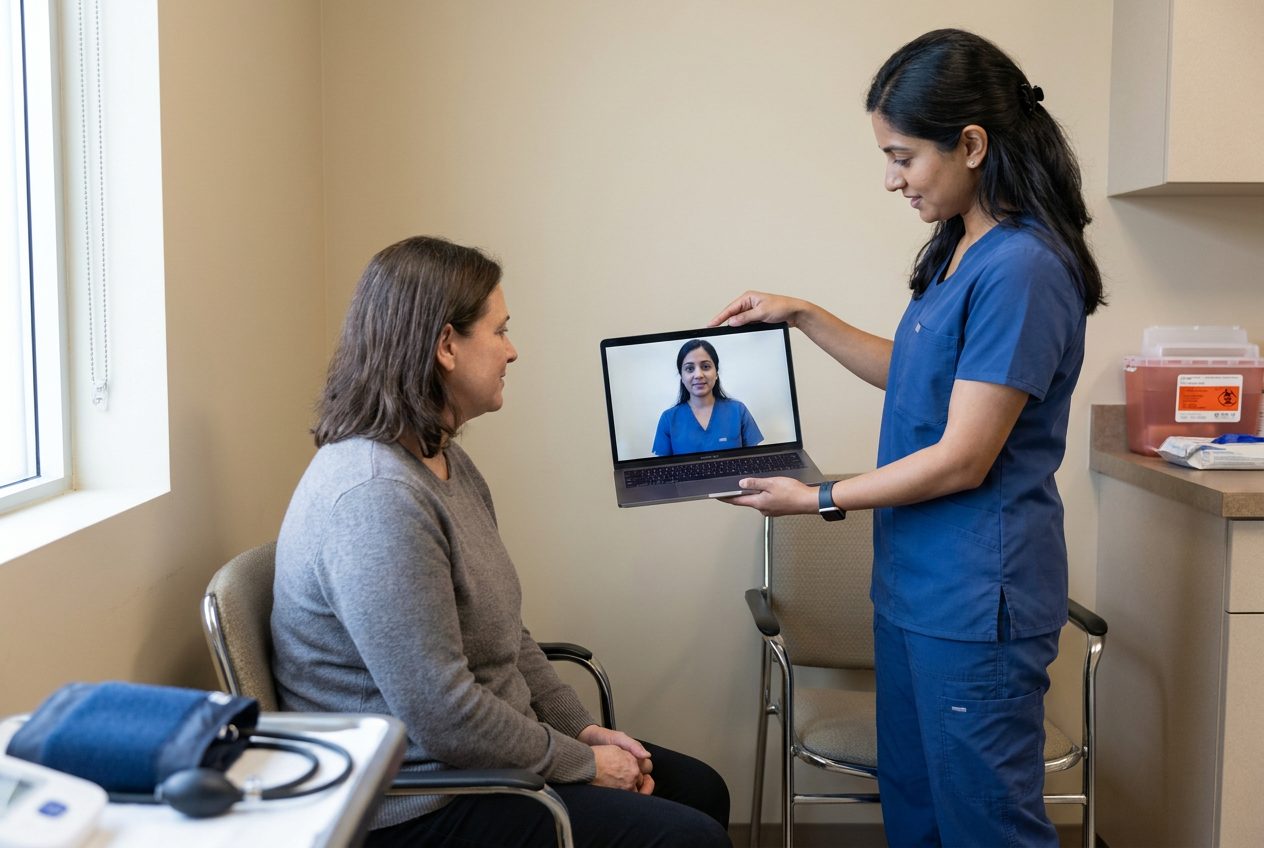
This course applies reference-based telehealth, consent, communication, safety, and care-coordination principles to nursing workflows across eight topics: modalities; structured assessment; red flags and escalation; privacy and consent; documentation; telephone and video communication; equitable access and adapted teaching; and technology continuity, handoffs, and professional limits.
- Contact hours
- 3
- Format
- Self-paced, online
- Last reviewed
- Sep 19, 2026
$15.00or included with All-Access
$5 per contact hour · 3 contact hours
Secure checkout. Certificates issue instantly and stay in your vault even after a subscription ends.
- No post-test required · unlimited retakes · evaluation and attestation always required
Course Purpose
This course applies reference-based telehealth, consent, communication, safety, and care-coordination principles to nursing workflows across eight topics: modalities; structured assessment; red flags and escalation; privacy and consent; documentation; telephone and video communication; equitable access and adapted teaching; and technology continuity, handoffs, and professional limits.
Continuing Education Credit Designation
This educational activity is credited for 3 contact hours at completion of the activity.
Overview
This course applies reference-based telehealth, consent, communication, safety, and care-coordination principles to nursing workflows across eight topics: modalities; structured assessment; red flags and escalation; privacy and consent; documentation; telephone and video communication; equitable access and adapted teaching; and technology continuity, handoffs, and professional limits.
Objectives
Upon completion of this independent study, the learner will be able to:
- Distinguish synchronous, asynchronous, and remote monitoring services and explain their different communication and review processes.
- Select a clinically suitable modality while considering examination limits, patient preferences, privacy, and technology access.
- Apply facility processes to verify patient identity, current location, callback information, and encounter participants.
- Organize symptom history around the presenting concern, onset, progression, associated symptoms, relevant background, and functional effects.
- Differentiate patient reports, caregiver reports, transmitted measurements, record information, and directly observed findings.
- Coach patient-reported measurements within approved device teaching without overstating reliability or delaying necessary escalation.
- Recognize severe distress, altered responsiveness, and deterioration as reasons to apply the facility escalation pathway.
- Explain why concerning findings or essential missing information require hands-on evaluation rather than unsupported remote reassurance.
- Communicate urgent concerns through structured handoffs while identifying unresolved issues and follow-up ownership.
- Protect spoken, written, and electronic information using approved systems and appropriate participant authorization.
- Support understandable, voluntary consent discussions that address remote care limitations, alternatives, questions, and patient understanding.
- Document modality, information sources, assessment limitations, teaching, escalation contacts, patient responses, and pending actions.
- Use clear telephone and video communication, open-ended questions, clarification, respectful language, and teach-back.
- Adapt teaching and follow-up to language, literacy, sensory needs, digital access, household privacy, and available support.
- Apply approved technology-failure procedures and reassess whether the fallback modality remains clinically adequate.
- Separate nursing scope, jurisdiction, organizational authorization, and payment questions, using current board, facility, prescriber, and payer pathways.
Policy Statement
This activity has been planned and implemented in accordance with the policies of FastCEForLess.com. This course should be used for informational purposes only and should not be used to diagnose, treat, prescribe, recommend, or initiate therapies or treatments in any setting. This course is copyrighted by Fast CE For Less, Inc. and may not be replicated, copied, or dispersed without written consent.
Disclosures
Fast CE For Less, Inc. and its authors have no disclosures. There is no commercial support.
Who this course is for:
Advanced Practice Registered Nurses, registered nurses, licensed practical or vocational nurses, and other healthcare providers in any setting who want continuing education on Telenursing: Remote Assessment, Communication and Safe Escalation.
Course outline
12 sections · finish in any order across devices
- 1
Course overview and learning objectives
- 2
Introduction
- 3
Telenursing: Remote Assessment, Communication and Safe Escalation — Modalities and Care Delivery
- 4
Structured Remote Assessment Without Physical Examination
- 5
Red-Flag Recognition and Safe Escalation
- 6
Privacy, Confidentiality, Identity, Location, and Consent
- 7
Documentation That Supports Safety and Error Reduction
- 8
Communication Skills for Telephone and Video Nursing
- 9
Equity, Digital Access, Health Literacy, and Adapted Follow-Up
- 10
Safety Systems, Technology Failure, Handoffs, and Professional Limits
- 11
Nursing Considerations
- 12
Conclusion
References
The full reference list is included inside the course, after the Conclusion.
Purchase required to access Fast Facts, pretests, posttests, course evaluations and certificates. Our one free course is the only exception.
This Course Satisfies
Requirement summaries come from our state requirement records. All Users of Fast CE For Less’s website and content are responsible for knowing their state’s license and renewal requirements.
Update history
Take this course and the rest of the library
Unlimited annual access covers every course, every state you track, and your certificates forever.
ENROLLStill have a question?
Ask about requirements, a course, pricing or your license. Answers come from our own course list and state notes.
Answers come from Fast CE For Less's own course list and our notes on state requirements. Always check your board's own rules before you count hours.