
Medical-Surgical Nursing: Surveillance, Deterioration and the Preventable Harms of the Adult Ward
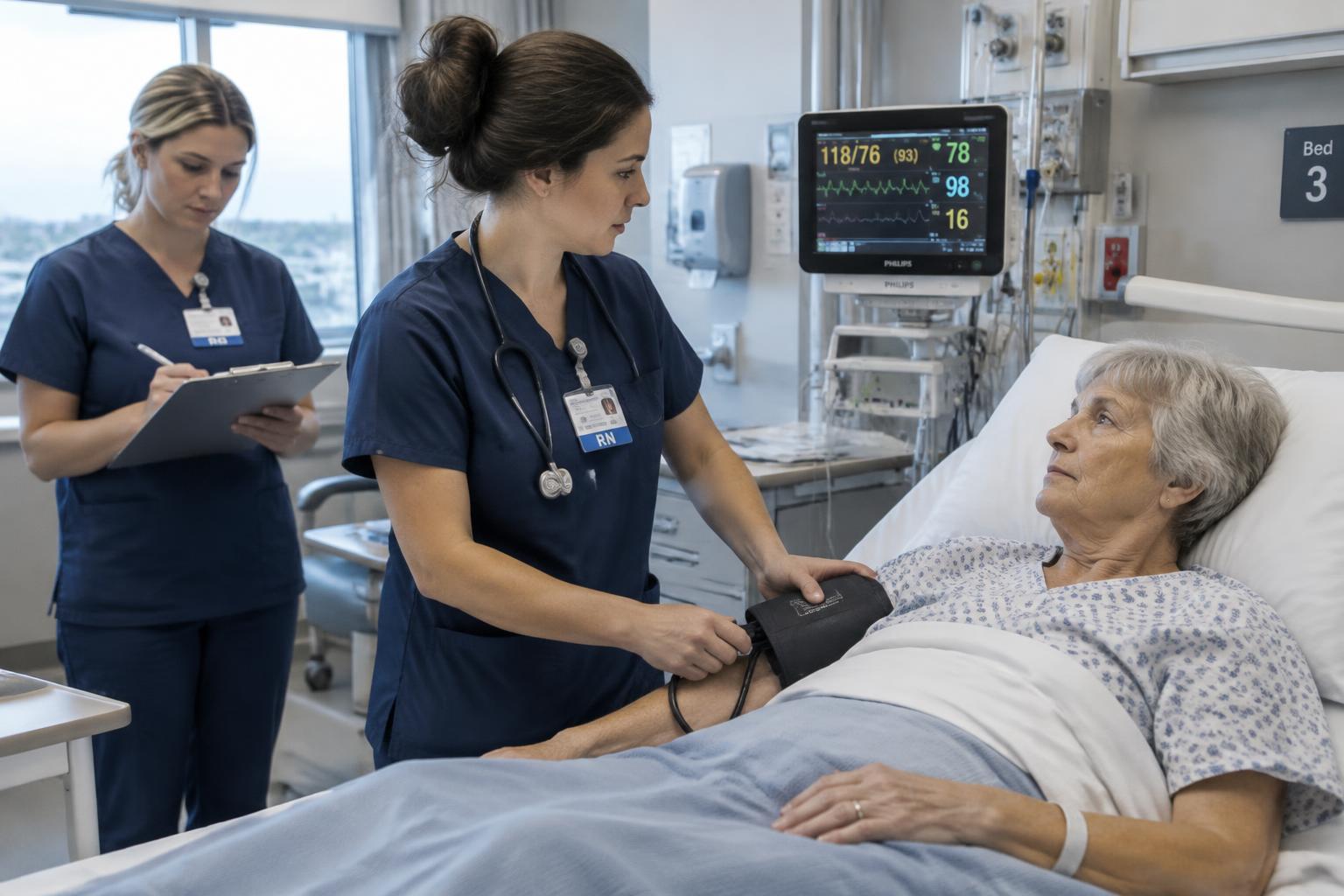
Examine adult medical-surgical surveillance, missed care, recognition of deterioration, rapid response, sepsis terminology, medication-safety concepts, falls, pressure injury, and handoffs. The course connects patient assessment with workload, communication, prevention, and timely escalation.
- Contact hours
- 3
- Format
- Self-paced, online
- Last reviewed
- Sep 19, 2026
$15.00or included with All-Access
$5 per contact hour · 3 contact hours
Secure checkout. Certificates issue instantly and stay in your vault even after a subscription ends.
- No post-test required · unlimited retakes · evaluation and attestation always required
Course Purpose
Examine adult medical-surgical surveillance, missed care, recognition of deterioration, rapid response, sepsis terminology, medication-safety concepts, falls, pressure injury, and handoffs. The course connects patient assessment with workload, communication, prevention, and timely escalation.
Continuing Education Credit Designation
This educational activity is credited for 3 contact hours at completion of the activity.
Overview
Examine adult medical-surgical surveillance, missed care, recognition of deterioration, rapid response, sepsis terminology, medication-safety concepts, falls, pressure injury, and handoffs. The course connects patient assessment with workload, communication, prevention, and timely escalation.
Objectives
Upon completion of this independent study, the learner will be able to:
- Describe the nurse's surveillance role in patient safety and explain why bedside continuity detects change that intermittent physician contact does not.
- Explain how staffing, acuity, turnover and skill mix influence the surveillance a nurse can actually provide, using the retrieved staffing evidence.
- Define missed nursing care, name its structural contributors and identify the care activities most frequently reported as missed.
- Describe what track-and-trigger and early warning systems are intended to do and state honestly what the surveillance evidence does and does not support.
- State the criteria that define the systemic inflammatory response syndrome and distinguish that syndrome from sepsis and septic shock.
- Explain why the Sepsis-3 task force removed the category of severe sepsis and what the revised definition of sepsis says.
- List typical rapid response system calling criteria and describe the afferent and efferent arms of such a system.
- Summarise the evidence on rapid response system effectiveness without overstating it, and explain why underutilisation matters.
- Differentiate a medication error, a potential adverse drug event, an ameliorable adverse drug event and a nonpreventable adverse drug reaction.
- Plan individualised fall prevention that does not achieve its aim by immobilising the patient.
- Apply Braden subscales and risk bands, stage a pressure injury by the retrieved definitions and describe preventative offloading.
- Give and receive a structured handoff using I-PASS or SBAR elements, and place hand hygiene correctly in the sequence of care.
Policy Statement
This activity has been planned and implemented in accordance with the policies of FastCEForLess.com. This course should be used for informational purposes only and should not be used to diagnose, treat, prescribe, recommend, or initiate therapies or treatments in any setting. This course is copyrighted by Fast CE For Less, Inc. and may not be replicated, copied, or dispersed without written consent.
Disclosures
Fast CE For Less, Inc. and its authors have no disclosures. There is no commercial support.
Who this course is for:
Advanced Practice Registered Nurses, registered nurses, licensed practical or vocational nurses, and other healthcare providers in any setting who want to strengthen patient surveillance, recognize deterioration, and prevent harm in adult medical-surgical care.
Course outline
12 sections · finish in any order across devices
- 1
Course overview and learning objectives
- 2
Introduction
- 3
Surveillance: The Work That Defines Medical-Surgical Nursing
- 4
Missed Nursing Care: The Harm That Comes From What Was Not Done
- 5
Recognising Deterioration: Track-and-Trigger Thinking and Its Honest Limits
- 6
Rapid Response Systems: Criteria, Two Arms, and the Culture That Decides Whether They Work
- 7
SIRS, Sepsis and Septic Shock: Getting the Vocabulary Right at the Bedside
- 8
Medication Safety: Saying Exactly What Happened
- 9
Falls and Pressure Injury: Two Harms That Punish Both Action and Inaction
- 10
Carrying the Patient Across the Gaps: Handoff, Hand Hygiene and What Nursing Owes the Next Shift
- 11
Nursing Considerations
- 12
Conclusion
References
The full reference list is included inside the course, after the Conclusion.
Purchase required to access Fast Facts, pretests, posttests, course evaluations and certificates. Our one free course is the only exception.
This Course Satisfies
Requirement summaries come from our state requirement records. All Users of Fast CE For Less’s website and content are responsible for knowing their state’s license and renewal requirements.
Update history
Take this course and the rest of the library
Unlimited annual access covers every course, every state you track, and your certificates forever.
ENROLLStill have a question?
Ask about requirements, a course, pricing or your license. Answers come from our own course list and state notes.
Answers come from Fast CE For Less's own course list and our notes on state requirements. Always check your board's own rules before you count hours.