
Hyperbaric Nursing: Chamber Safety, Approved Indications and Patient Preparation
3 contact hours nursing continuing education course: Hyperbaric Nursing: Chamber Safety, Approved Indications and Patient Preparation.
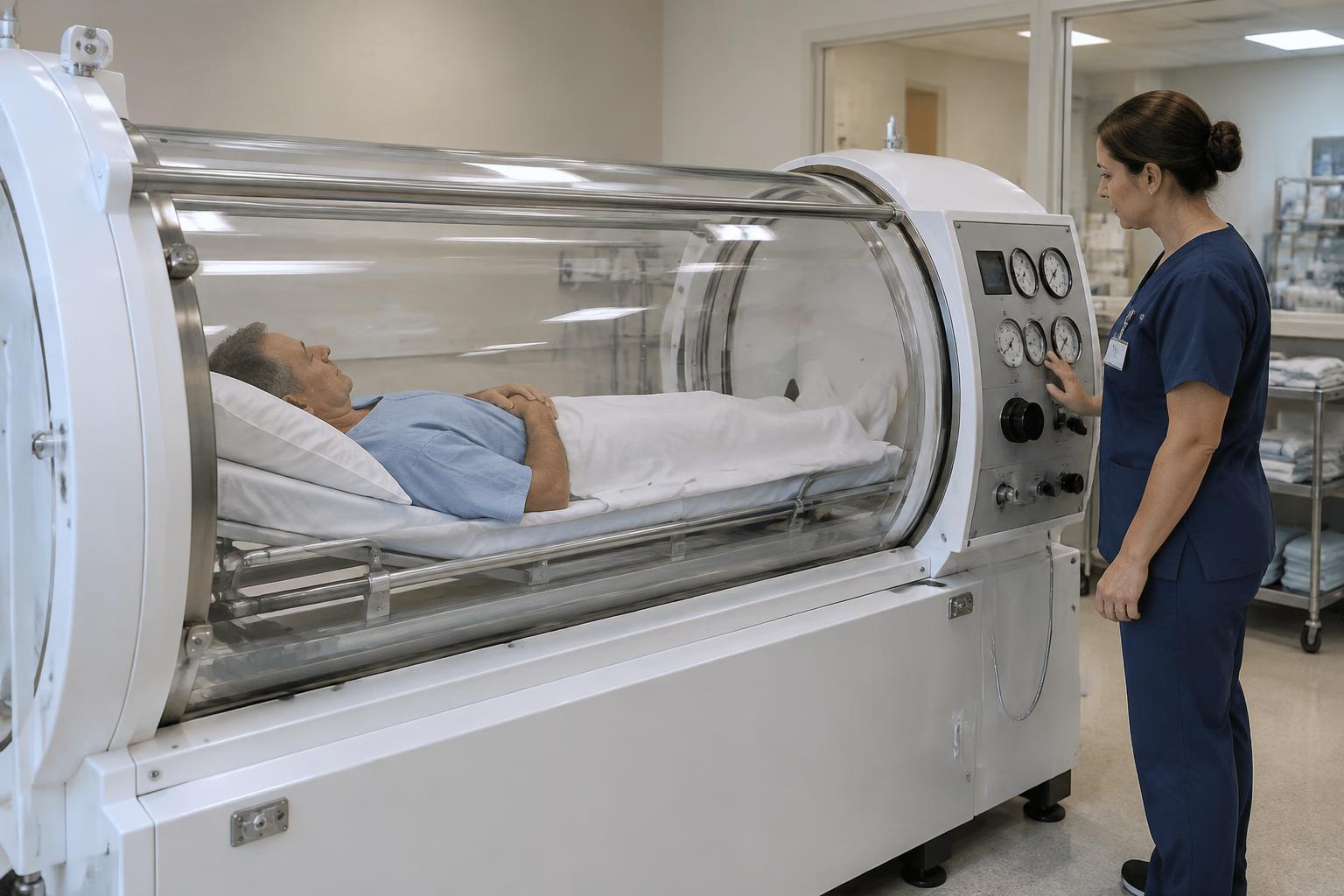
- Contact hours
- 3
- Format
- Self-paced, online
- Last reviewed
- Sep 19, 2026
$15.00or included with All-Access
$5 per contact hour · 3 contact hours
Secure checkout. Certificates issue instantly and stay in your vault even after a subscription ends.
- No post-test required · unlimited retakes · evaluation and attestation always required
Course Purpose
3 contact hours nursing continuing education course: Hyperbaric Nursing: Chamber Safety, Approved Indications and Patient Preparation.
Continuing Education Credit Designation
This educational activity is credited for 3 contact hours at completion of the activity.
Overview
3 contact hours nursing continuing education course: Hyperbaric Nursing: Chamber Safety, Approved Indications and Patient Preparation.
Objectives
Upon completion of this independent study, the learner will be able to:
- Define hyperbaric oxygen therapy and distinguish it from breathing 100 percent oxygen at 1 ATA or applying oxygen topically.
- Describe monoplace and multi-place chambers and the pressure range at which treatment is usually delivered.
- Explain Boyle's and Henry's laws and connect each to a therapeutic effect and to an injury nurses watch for.
- List the conditions currently approved for hyperbaric treatment and the conditions Medicare covers.
- State the coverage criteria for diabetic lower-extremity wounds and the 30-day rule for continuing treatment.
- Name conditions explicitly listed as non-covered so that expectations can be corrected early.
- Teach ear equalization before pressurization and recognize middle ear barotrauma when it occurs.
- Recognize central nervous system and pulmonary oxygen toxicity and report them without delay.
- Apply chamber fire and explosion precautions during patient preparation.
- Explain why untreated pneumothorax is the only absolute contraindication to treatment.
- Describe carbon monoxide poisoning, its carboxyhemoglobin half-lives on air, normobaric and hyperbaric oxygen, and the accepted referral criteria.
- Place hyperbaric oxygen among the other wound treatments used for diabetic foot ulcers, gangrene and pressure sores.
Policy Statement
This activity has been planned and implemented in accordance with the policies of FastCEForLess.com. This course should be used for informational purposes only and should not be used to diagnose, treat, prescribe, recommend, or initiate therapies or treatments in any setting. This course is copyrighted by Fast CE For Less, Inc. and may not be replicated, copied, or dispersed without written consent.
Disclosures
Fast CE For Less, Inc. and its authors have no disclosures. There is no commercial support.
Who this course is for:
Advanced Practice Registered Nurses, registered nurses, licensed practical or vocational nurses, and other healthcare providers in any setting who want continuing education on Hyperbaric Nursing: Chamber Safety, Approved Indications and Patient Preparation.
Course outline
12 sections · finish in any order across devices
- 1
Course overview and learning objectives
- 2
Introduction
- 3
What Hyperbaric Oxygen Therapy Is, and What It Is Not
- 4
The Physics You Actually Need at the Bedside
- 5
Approved Indications and What Medicare Actually Covers
- 6
Carbon Monoxide Poisoning: The Emergent Indication Nurses Meet Most
- 7
Ears First: Teaching Equalization and Recognizing Barotrauma
- 8
Oxygen Toxicity and What to Watch During and After a Session
- 9
Preparation, Fire Risk and the One Absolute Contraindication
- 10
Wounds, Expectations and the Limits of the Evidence
- 11
Nursing Considerations
- 12
Conclusion
References
The full reference list is included inside the course, after the Conclusion.
Purchase required to access Fast Facts, pretests, posttests, course evaluations and certificates. Our one free course is the only exception.
This Course Satisfies
Requirement summaries come from our state requirement records. All Users of Fast CE For Less’s website and content are responsible for knowing their state’s license and renewal requirements.
Update history
Take this course and the rest of the library
Unlimited annual access covers every course, every state you track, and your certificates forever.
ENROLLStill have a question?
Ask about requirements, a course, pricing or your license. Answers come from our own course list and state notes.
Answers come from Fast CE For Less's own course list and our notes on state requirements. Always check your board's own rules before you count hours.