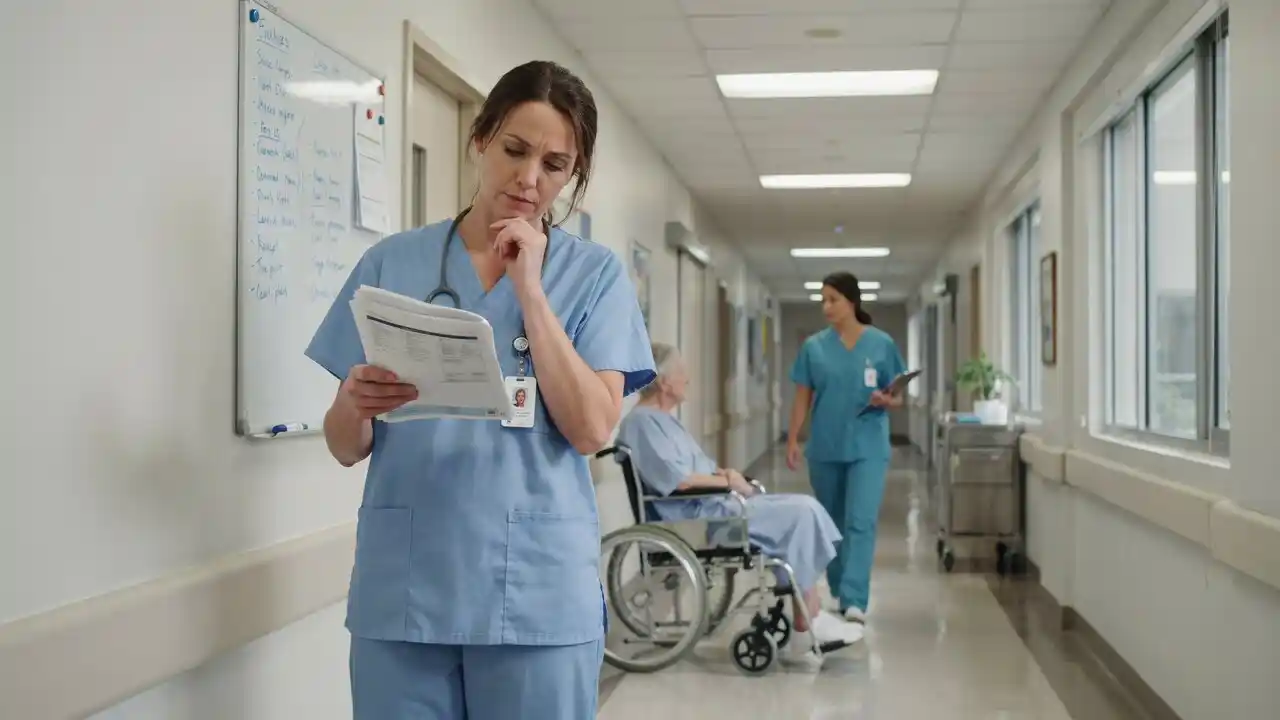
It’s one of the most quietly difficult moments in nursing: a terminally ill patient states, clearly and calmly, what they want at the end of life — and it doesn’t fully align with the unit’s usual protocol, the family’s wishes, or even the care team’s instincts. Dying with dignity is supposed to be the core of nursing practice, but very few nurses receive structured training on how to navigate death anxiety, cultural conflict, and patient autonomy at the exact moment they collide. The result is a gap between the value nurses hold — respecting the patient — and the practical skill of applying that value under pressure, in real time, in a room full of grief.
Why Dying With Dignity Is Harder Than It Looks
Death is the one clinical outcome every patient will eventually face, yet it’s often treated as a topic to be avoided rather than actively prepared for. Nurses are expected to provide end-of-life care that honors a dying patient’s cultural beliefs and personal wishes while simultaneously managing family dynamics, documentation requirements, and their own emotional response to loss. Without a framework for these conversations, well-intentioned nurses can default to what’s procedurally easiest rather than what actually honors the patient in front of them.
The Core Concepts Every Nurse Needs for End-of-Life Care
A meaningful dying with dignity course needs to move past abstract philosophy and into concepts nurses can apply on shift:
- How death anxiety and defense reactions show up in both patients and their families
- The role of spirituality and cultural belief systems in end-of-life decision-making
- The American Nurses Association’s official position on euthanasia and where the professional boundaries lie
- Practical strategies for patient-centered communication with terminally ill patients
- How to support family members through decisions they may not be prepared to make
This is the exact structure behind the Dying with Dignity course offered by Fast CE For Less — a 2.5-contact-hour program built specifically to give nurses a working framework for these conversations, rather than a purely theoretical overview of end-of-life ethics.
Why This CEU Category Gets Overlooked
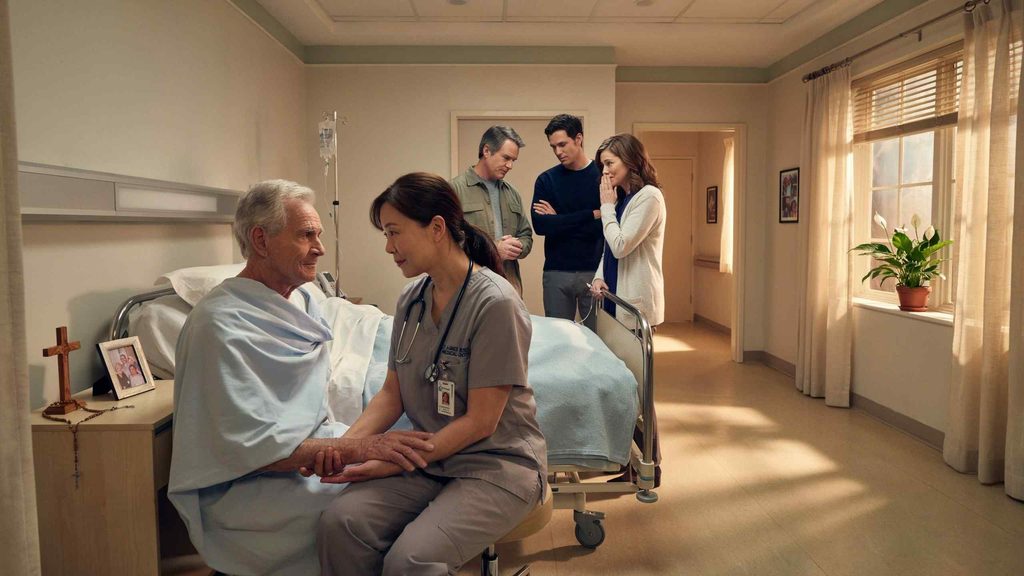
Compared to clinical topics like cardiovascular disease or infection control, dying with dignity and end-of-life care CEUs are frequently deprioritized — not because nurses don’t value the subject, but because it’s emotionally heavier to sit with and easier to postpone. Yet nearly every nurse will eventually be the person standing at a dying patient’s bedside without a script. Treating this as a checkbox for continuing education courses for nurses misses what the training actually offers: a language for a conversation most nurses are otherwise left to improvise.
Making the Course Itself Easy to Complete
Given how emotionally demanding the subject matter already is, the last thing a nurse needs is a complicated, drawn-out course format. A fast, no-test CEU for nurses approach — independent reading followed by a short evaluation and an instant certificate — lets nurses absorb difficult material at their own pace without the added pressure of a timed exam. For nurses comparing free nursing CEUs no test options against paid alternatives, it’s worth remembering that a well-written, focused course on a sensitive topic like this is often worth prioritizing over a longer, more generic one.
Hearing From Nurses Who’ve Already Taken It

Because end-of-life care content is inherently more sensitive than a purely clinical topic, it helps to know how other nurses experienced the course before you enroll. Reading through Fast CE For Less reviews can offer a clearer sense of whether the material actually prepared nurses for real conversations at the bedside, or whether it stayed too abstract to be useful in practice.
Dying With Dignity Isn’t Automatic — It’s a Skill
Respecting a dying patient’s wishes sounds simple in principle and is often genuinely difficult in practice, especially when culture, family expectation, and hospital protocol pull in different directions. Structured continuing education won’t remove the emotional weight of these moments, but it gives nurses something they rarely get elsewhere: a clear, defensible framework for honoring what a patient actually wants, even when it’s the harder path to take. Fast CE For Less built this course with exactly that goal in mind.
Frequently Asked Questions
What’s the difference between “dying with dignity” and physician-assisted death?
Dying with dignity is a broader philosophy centered on patient-centered, respectful end-of-life care — pain management, autonomy, and cultural sensitivity — and applies to virtually every terminally ill patient. Physician-assisted death is a specific, legally regulated practice available only in certain jurisdictions and is a distinct topic from the general dignity-in-care framework most nurses will apply daily.
How does dying with dignity training address do-not-resuscitate (DNR) conversations specifically?
It typically frames DNR discussions as part of a larger patient-centered conversation about goals of care, rather than a single isolated form to complete. Nurses are encouraged to understand a patient’s values and quality-of-life priorities first, since that context shapes how a DNR conversation is framed and who should be present for it.
Can dying with dignity CE hours count toward palliative care or hospice-specific requirements some employers mandate?
Often yes, since the core content overlaps significantly with palliative and hospice competencies, but acceptance depends on your specific employer’s or credentialing body’s category definitions. Confirm with your HR or education department whether this course satisfies an internal palliative care requirement before assuming it does.
How should nurses handle situations where a patient’s family disagrees with the patient’s own end-of-life wishes?
The general principle in patient-centered care is that a competent patient’s own wishes take priority, but navigating family disagreement well requires facilitated communication, not confrontation. This often means involving palliative care teams, chaplains, or ethics consultants to mediate rather than the bedside nurse managing the conflict alone.
Does dying with dignity training cover pediatric end-of-life care, or only adult patients?
Most general dying with dignity courses focus primarily on adult, terminally ill patients and the associated cultural, spiritual, and autonomy considerations. Pediatric end-of-life care involves distinct developmental, family-dynamic, and ethical considerations, so nurses working in pediatric settings should look for content or additional coursework specifically addressing that population.